Splitting the story into two separate books is an obvious piece of ancient marketing (a.k.a. piggy-backing or spin-off). With the Odyssey the author simply pulled one more layer of skin off the already baroquely detailed siege of Troy. Still, the teasers around Helen the Beautiful [the resident hot chick] and Achilles (a.k.a. a classical, marble-washed Superman) were working surprisingly well even at the dawn of literacy, so you really could lure massive audiences into the amphitheatres. At the same time, by including Patroclus [basically Batman’s Robin in a chiton] the author also managed an early gesture of openness towards what we would now politely call diversity.
In order to reduce publishing costs related to papyrus usage and scribes’ wages, the essential content of the two books can be safely condensed, while preserving the key information, along the following guiding principles:
The Iliad in a nutshell
Prequel to the Iliad: under the Spartan flag, the united Greek armies marched on Troy in force, following a conveniently fabricated casus belli. Between the lines, in a modern edition, one might still reveal that, of course, a woman was involved – which, even by today’s moral standards, is perfectly acceptable. If you need a casus belli, there will be a casus belli.
The siege drags on for an absurdly long ten years (of which the author describes a mere fifty-one days in almost embarrassingly minute detail). And yet, even so, there is no credible account of how the Parties financed, supplied and kept reasonably healthy their forces through those years, so any background information on these aspects of the conflict should be treated with due caution (since, as a matter of principle, we do not publish second-hand, dubious, pseudo-informational fluff).
The supposedly decisive Trojan Horse ploy is so childish that it’s hard to believe readers swallowed it for millennia. In the interest of objectivity, this should therefore be replaced by a neutral phrase along the lines of: “under circumstances that remain unclear to this day, the town fell”.
Endgame: the subsequent bloodbath can be omitted entirely on account of being very much age-restricted content; at most, we may note that “heavy atrocities followed, during which the vengeful Greeks did not spare even the defenceless civilian population.”
Is the Odyssey nothing but a botched spin-off?
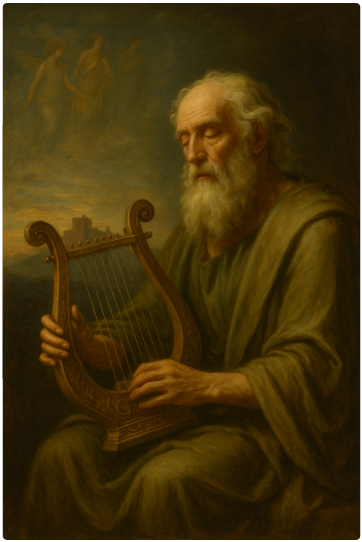
The second book, the Odyssey, is essentially a kind of romantic Eastern-Mediterranean Baedeker, and yet it is hard to believe our readers could be so geographically illiterate as to accept that Scylla and Charybdis – which in real life mark the Strait of Messina – somehow lie on the direct route between Troy and Ithaca. (A single glance at Google Maps would settle the matter.)
By its very nature the Odyssey doesn’t really fit with the action-heavy Iliad, and it is highly likely that the two works have markedly different readerships as well. For that reason we can cheerfully chuck the second book straight into the bin. To preserve factual fairness, however, we may insert at most a two-page addendum after the Iliad explaining that, on his way home, Odysseus got massively lost (and since by the end the cast of characters is heavily thinned out, we more or less have no one else left to talk about anyway). During these wanderings he cheated on his wife on pretty much every island he dropped anchor at (Circe being only one of many casual flings), and once he finally made it home, in the spirit of equal treatment he so severely mistreated the various men buzzing around his wife – regardless of their age or social status – that not one of them survived the experience.
Epilogue
This particular brand of vigilante justice more or less fit within the customs of the time (the rule of law was not yet a thing; we still had roughly six hundred years to wait just for Athenian Solon to be born), so there is really nothing to prevent us from continuing to treat Odysseus as one of the positive heroes of the story – indeed, as a kind of proto-humanist of antiquity.
Homer’s Reflection
O Zeus above, why did you permit me to read this abomination? My eyes are bleeding, the strings of my lyre jangle off-key, and the Muses—once my divine companions—now merely snicker into my beard. Piggy-backing? Spin-off? A marketing tactic?! I sweated hexameters by firelight, not pitch decks in amphitheatres.
The ten-year siege? This modern scribe deems it “unreasonably long,” whereas I maintain it was ten glorious seasons during which the good people of Athens were entertained—gratis, or at worst for a modest contribution to the poet’s cup. And while they were thusly entertained, I took the liberty of crafting, with some elegance, the narrative of “those blasted Spartans.” That was not a war; it was humanity’s earliest form of binge-watching.
And to call Patroclus “Batman’s Robin”… May Athena’s sacred olive tree wither on the spot if that isn’t outright blasphemy! I sang of heroes, of glory, of valour—and these cheeky scribblers now list the Trojan Horse as if it were some venture-capital-funded tech innovation. Odysseus, apparently, has become a romantic Mediterranean travel writer, or worse, a sort of wandering Lonely Planet influencer whose chief accomplishment is managing to cheat on his wife on each and every island. Admirable stamina, I grant you—most men struggle merely with the shipwreck.
Sophocles must be spinning in his tomb. “Humanist, Odysseus?!” he would shout. “Gentlemen, that is not anachronism—it is parody!” And all I can add is this: if anyone, anyone, ever again dares to describe the Odyssey as a “romantic Eastern Mediterranean travel guide”, I shall personally spit upon the shores of Ithaca and have Odysseus slaughter the suitors all over again, purely for pedagogical effect.
No. I cannot endure this torment any longer. I shall return to Hades and request a draught from the River Lethe—the Water of Forgetfulness, the ancient world’s answer to methamphetamine, or indeed its precursor to crack cocaine. One sip, and all pain, all foolishness, all this bullshit reloaded shall mercifully evaporate.